LOG IN

Members and suppliers: Join our online community

Access our full library of resources, register for events and webinars and share audits and other assessments

Our resource library is made available freely to all in order to advance responsible supply chain practices. Here you will find information and guidance on responsible supply chain issues and the way that the PSCI works. If you have any suggestions for improvements or additions to our resources please contact us.

Search & Filter

Clear Filters
This resource was published on 26 October
The PSCI Wastewater Analysis Project Final Report NOW AVAILABLE

The PSCI Wastewater Analysis Project Final Report NOW AVAILABLE

Document

The PSCI Wastewater Analysis Project report presents the outcomes of a multi‑year, collaborative initiative from 2022 to 2025.

In response to growing regulatory and stakeholder focus on pharmaceutical emissions and antimicrobial resistance (AMR), this project set out to evaluate whether in‑region laboratories in India can reliably measure active pharmaceutical ingredients (APIs) in wastewater at very low concentrations. Strengthening regional analytical capability is critical to improving data reliability and reducing reliance on international sample shipment.

Through a structured, multi‑phase approach, PSCI members collaborated with selected laboratories to:

  • Assess analytical capability and infrastructure
  • Compare results with established reference laboratories
  • Identify gaps in consistency, accuracy, and reproducibility
  • Generate practical, actionable recommendations

How to Use This Publication
This report is intended as a guidance and learning resource for PSCI members. It supports:

  • More informed selection and engagement with analytical laboratories
    Improved understanding of wastewater API testing challenges
    Strengthened environmental risk assessment and decision‑making
  • It is not intended as a ranking or endorsement of any laboratory.

PSCI extends its sincere thanks to the four member companies who contributed to this work Pfizer, Centrient Pharmaceuticals, Boehringer Ingelheim, and Novartis for their technical expertise, sample contributions, and sustained engagement throughout the project.

We invite thoughts/feedback on the report here. Thank you!

  • Waste Management
  • Water Use & Management
  • Pharmaceuticals In The Environment
This resource was published on 30 September 2022

India Supplier Conference 2022 - Session 2 - Slides

The second session of the 2022 PSCI India supplier conferences took place in-person on the 22nd of September and covered Audit, Environment, Scope 3, PiE/AMR

The full slide deck is available for download below.

The presentations covered are as follows:

  • PSCI Audit Program – Practical Guidance & Panel Discussion
    Rincy Joseph, Senior Manager SSHE Supplier Management, Bayer
  • Engaging Suppliers to Reduce Scope 3 Emissions Towards Net Zero
    Robert Williams, Director of Procurement Sustainability, Astra Zeneca
  • Ban on Identified Single Use Plastic – The Whats, Whys and Hows
    Ashish Jain, Founder-Director, Indian Pollution Control Association (IPCA)
  • Climate change – Risks to Organizations
    Shivananda Shetty, Partner & Head, ESG and Climate Change, KPMG
  • Supplier Water Quality & Pharmaceuticals in Environment
    Balaji Gurumurthy, Environmental Compliance Lead, Novartis
  • Reducing AMR Risk Through Effective Control of Antibiotic Manufacturing Emissions
    Dharmesh Kharwar, Director, NGB Laboratories
  • PSCI Musi River Project
    Manjit Singh, Associate Director of Corporate Sustainability, Centrient Pharmaceuticals
    Senthil Kumar, Supplier Operations, Pfizer
  • Case studies – Implementation of Good Practice in Management of API Containing Waste Streams
    Ashok Kumar Podisetty, Head of EHS, Neuland Laboratories Limited
  • Developing PiE/AMR Capabilities in India
    Aditya Shirodkar, Global Senior EHS Specialist, Abbott
  • Environment
  • Spills & Releases
  • Waste Management
  • Pharmaceuticals In The Environment
  • Anti-Microbial Resistance
  • Audit Program
This resource was published on 9 August 2022
Particulate Containment Verification With Surrogate Monitoring - Slides

Particulate Containment Verification With Surrogate Monitoring - Slides

Slides

Surrogates such as naproxen sodium, lactose and mannitol are used in place of an API to determine particulate containment provided by a containment equipment such as an isolator. Selection of a surrogate, surrogate properties (moisture content, particle size distribution), methods for surrogate monitoring, locations of area positional samples, and Containment Performance Target (CPT) concentrations,  are critical in the decision making,  among other factors.   The speakers will share surrogate monitoring methods utilizing ISPE Good Practice Guide: Assessing the Particulate Containment Performance of Pharmaceutical Equipment.

The webinar was created by:
• Maharshi Mehta, CIH, CSP, FAIHA, President
• Ankit Sharma, CIH, LFOH, Associate Director, International Safety Systems, Inc (ISS)

  • Identification Of Concerns
  • Process Safety
  • Hazard Information
  • Waste Management
  • Regulations
This resource was published on 12 April 2021

Environmental Survey For Suppliers - Guidance For Suppliers

Document

This document is a step by step guidance on using the PSCI Environmental survey for suppliers on the PSCI platform. If you have any further questions, please do not hesitate to contact us.

  • Environment
  • Waste Management
  • Water Use & Management
  • Decarbonization
  • Sustainability Data
This resource was published on 12 April 2021

Environmental Survey For Suppliers - Excel Version 2021

Template

This file contains the latest version of the PSCI Environmental survey for suppliers in Excel. The scoring for each question is detailed and questions are mapped across to the previous version.

This resource was published on 14 September 2020

PIE & AMR Webinar (Wastewater Treatment Technologies) - Recording & Slides

Webinar

The webinar explored best practice wastewater treatment methods for managing the release of APIs into the environment from pharmaceutical manufacturing sites. It was delivered by renowned experts and featured case studies on novel treatment technologies.

We were delighted to be joined by the following speakers:

  • Jeffrey Brenchley from Merck (MSD) (Senior Specialist, Global Safety & Environment), speaking about vacuum evaporation
  • Birgit Mertens from Johnson & Johnson (Senior Principal Environment Worldwide EHS&S), speaking about ozone as pretreatment
  • Jonathan Rhone from Axine Water Technologies Inc. (President and CEO), speaking about electrochemical oxidation

Participants are invited to share feedback about this webinar here.

The recording is available here. (Please refresh the page if you cannot play the video.)

The slides used during the webinar are available to download below.

Please also note that registration for the second session of our supplier conferences is open until 17 September. Topics covered will include climate change (GHG) & sustainable packaging ; sampling and analysing APIs in wastewater with case studies ; a case study on Controlling API Releases; environmental hazards of drugs and case analysis ; and mass balance calculations. To register, please click here for the China session and here for the India session.

Finally, we want your views! We're encouraging all suppliers to take this short survey to help the PSCI understand the impact it has on suppliers.

  • Spills & Releases
  • Waste Management
  • Pharmaceuticals In The Environment
  • Anti-Microbial Resistance

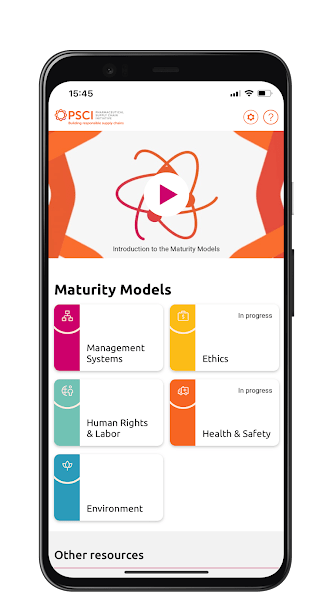
Download The PSCI Maturity App

Maturity App
Maturity App
Maturity App

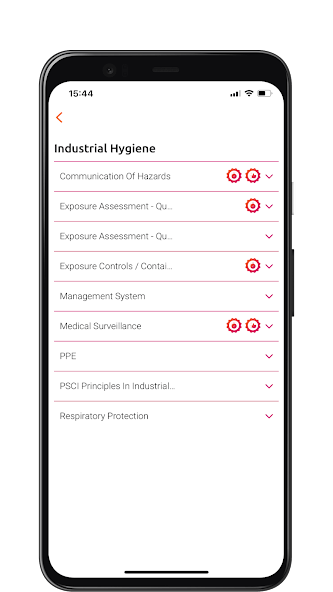
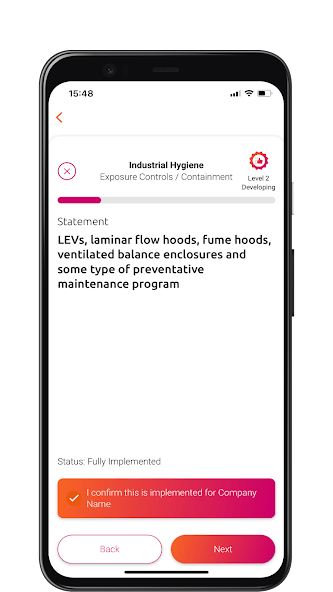
The PSCI Maturity App provides an interactive experience of the PSCI Maturity Models. Available on Android and iOS.